
Blog
Water softener: how it works and when it is needed

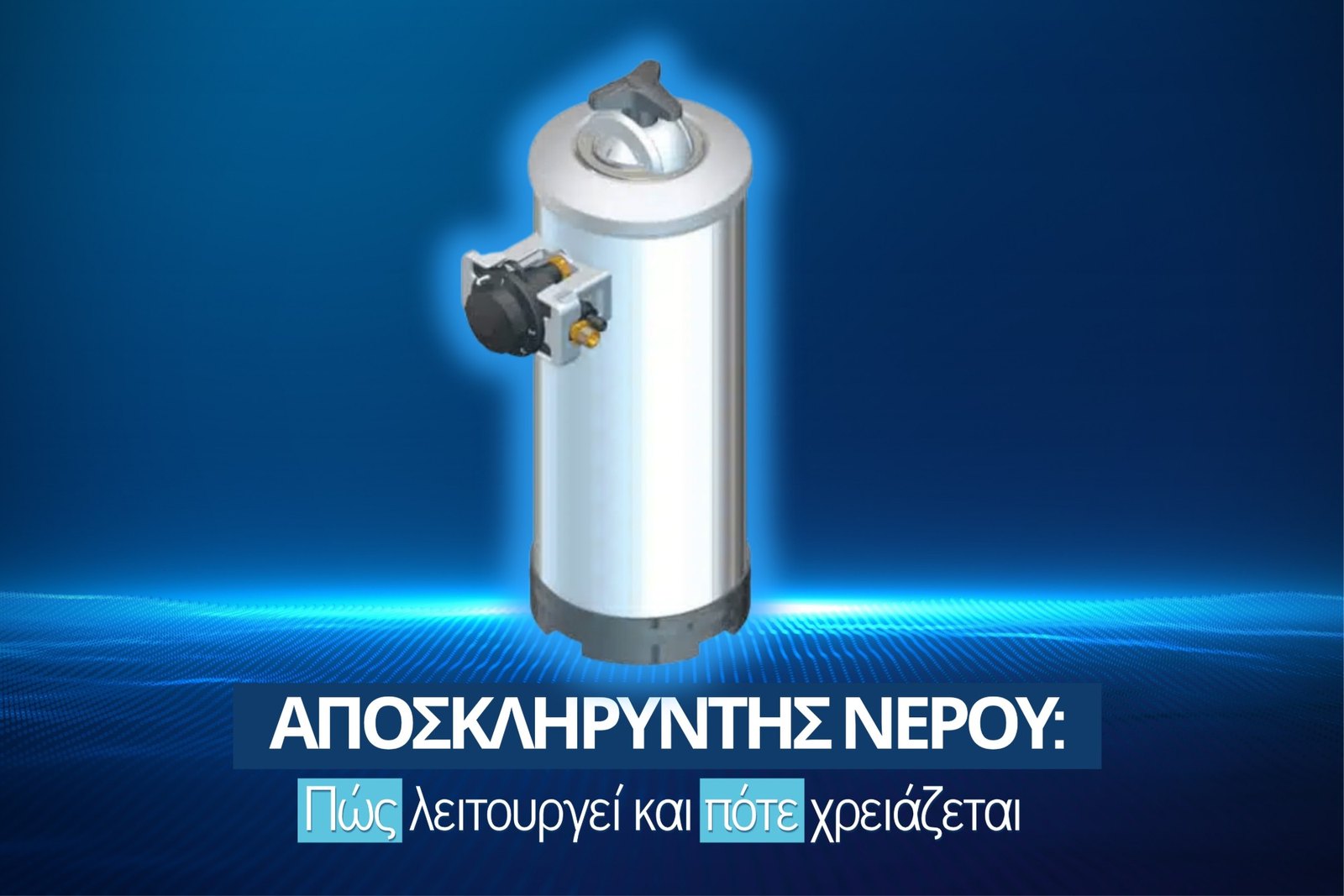
The water softener reduces hardness by binding calcium and magnesium. It is placed in the main supply or before the appliances you want to protect from scale deposits, with the choice depending on the hardness of the water, consumption and the areas of the house you want to cover.
If you are only concerned about salts in the water you use in the kitchen, you can consider a filter with a salt cartridge. When the water heater, washing machine or other pipes are also affected, treatment before these supplies needs to be considered.
Start with water hardness
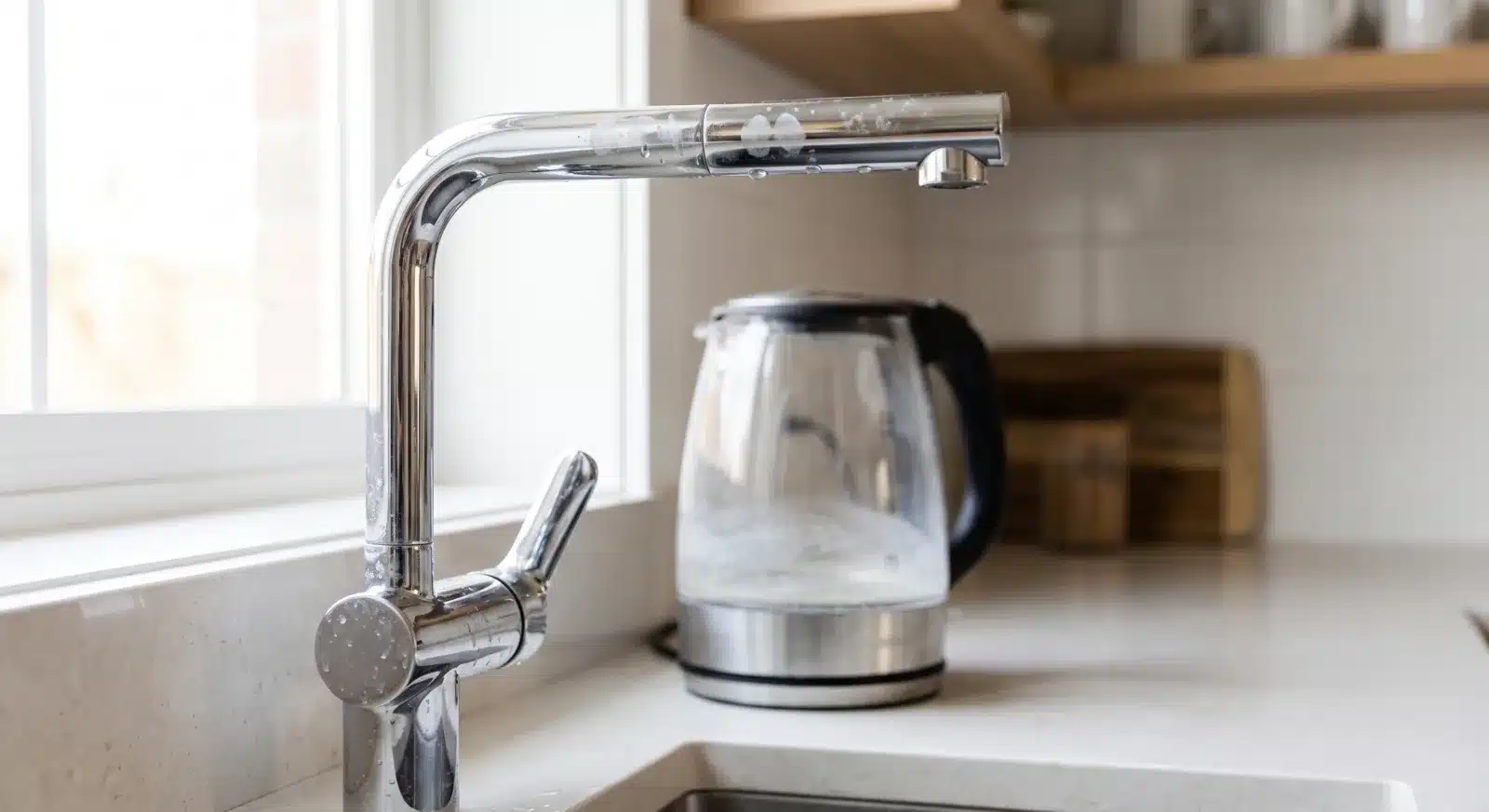
The scale on the kettle indicates deposits. To select a device, you need a measurement. You can consult the recent analyses of the water supplier and, where necessary, have a sample measured from your own supply.
Check the unit of hardness. One French degree (°f) corresponds to 10 mg/L as calcium carbonate. So 30 °f corresponds to 300 mg/L. On the scale in our article on hardness water hardness, values above 250 mg/L are classified as very hard water.
The U.S. Geological Survey describes hardness based on dissolved calcium and magnesium in water, which when heated can create solid calcium carbonate deposits, like those you see on your kettle and water heater.
Prices may vary by region and period. For example, in August 2026 bulletin of DEYAMB, 16 of the 17 points of the Volos urban complex had a hardness of 27 to 41 °f. In April, the values at the 16 compared points were 9 to 15 °f. The difference is presented in more detail on the page for the water filters in Volos.
Keep the unit together with the value. "20" alone is not enough: 20 French and 20 German degrees express different hardness.
What does resin do and why does it need regeneration?
Inside the softener is a resin. As the water passes through it, its calcium and magnesium content decreases, until it is time for regeneration, which restores the resin to working condition for the next cycle of use.
Regeneration is done with a salt solution. To the engineers water softeners S-112 and S-140 available from Olympus, the process is manually controlled by a four-position button:
| Position | Operation |
|---|---|
| 1 | Normal operation and supply of softened water |
| 2 | Stopping the water to add salt, according to the instructions |
| 3 | Regeneration of the resin and removal of salt water to the sewer |
| 4 | Backwash |
During regeneration, the water supply continues, but the water is not softened. During backwashing, the supply is interrupted.
The MIXER valve adjusts the final hardness. For adjustment and regeneration, follow the complete instructions of the device, using the table above as a reference for the function corresponding to each position of the knob.
Filter in the kitchen or softener in the main supply?;
The installation location determines the coverage. An under-counter filter covers the water coming out of its own tap. A water softener in the mains water supply treats the water in the lines fed after it.
An Olympus double filter with a salt cartridge reduces hardness in kitchen water and has the basic cartridge for chlorine, pesticides and heavy metals. The triple adds a nitrate cartridge. The guide which water filter should I choose? explains the different options.
The central water softener is used to reduce deposits in pipes and appliances it serves. It does not remove chlorine, heavy metals or microbes. If you want to cover these drinking water needs as well, it can be combined with an Olympus filter in the kitchen.
| Solution | Installation point | Use | Price |
|---|---|---|---|
| Double under counter with salt ampoule | Under the sink | Basic filtration and salt reduction in kitchen water | €174 with tap |
| Triple under counter | Under the sink | Basic filtration, salt and nitrate reduction | €234 with tap |
| Water softener S-112 | Central supply or selected cold water line | Softening before the benefits you want to cover | 178 € |
| Water softener S-140 | Central supply or selected cold water line | Same use, with a larger amount of resin | 215 € |
Softening is different from desalination. It mainly targets calcium and magnesium, which cause hardness, while desalination involves removing dissolved salts from salt or brackish water. For brackish water, an appropriate system, such as reverse osmosis, needs to be evaluated based on the flow analysis.
S-112 or S-140: what to compare before buying
The two models differ in the amount of resin, weight, height, and the amount of salt required for each regeneration.
| Feature | S-112 | S-140 |
|---|---|---|
| Weight | 12.5 kg | 19 kg |
| Height | 600mm | 900mm |
| Amount of resin | 11.2 liters | 14 liters |
| Salt per regeneration | 2 kg | 2.5 kg |
| Maximum flow rate | 900 liters/hour | 900 liters/hour |
| Supply pressure | 1 to 8 bar | 1 to 8 bar |
| Water temperature | 4 to 25 °C | 4 to 25 °C |
| Price | 178 € | 215 € |
Consider consumption and hardness. The amount of resin is a selection factor along with the daily use of the line to be served and the flow rate required when operating multiple faucets together.
900 liters/hour corresponds to 15 liters/minute. This is a maximum flow rate, not the amount of water the resin can process between two regenerations. So compare flow rate and capacity separately.
How do you calculate daily consumption?
Look at your latest water bill. It usually lists the usage in cubic meters, so to find your daily usage, convert the cubic meters to liters and divide by the number of days in the period:
Daily consumption in liters = cubic meters of the period × 1,000 ÷ days of the period.
In a hypothetical example, if the bill says 12 m³ for 60 days, the calculation is 12 × 1,000 ÷ 60 = 200 liters per day. Plug in your own consumption into the formula.
If the softener only serves part of the house, you need to isolate the consumption of that part, as the total meter reading may include water that will not pass through the device.
Once the capacity between regenerations has been determined for your model and the hardness of your supply, the indicative calculation is:
Days between regenerations = liters the device can process per cycle ÷ liters of daily use.
Ask for the appropriate capacity and regeneration schedule for your installation. The calculation helps with planning, while the maintenance instructions determine how to use it.
Installation and daily care
The S-112 and S-140 operate with cold water, within the range of 4 to 25 °C. If they are to protect a water heater, they are installed in its supply, before heating. They also need a suitable drain for the regeneration water and space so that you can operate and maintain the device.
For regeneration, use only the coarse sodium chloride (NaCl) specified in the instructions, in the correct amount for the model. The resin remains inside the device. Before closing the lid, remove any salt residue from the sealing ring.
Note the regenerations and consumption. If the hardness of the supply or the use of the house changes significantly, the maintenance frequency also needs to be reviewed. For more on deposits, read the article Hard water: how it affects your home.
See them water softeners and the central supply filters, having your water analysis and consumption data with you. This way you can compare the options for your use.
Frequently asked questions
What does a central water softener do?;
It reduces calcium and magnesium that cause hardness, to limit deposits in pipes and devices supplied after it. The installation must be checked for hardness, consumption and required flow.
Does the softener remove chlorine from the water?;
No. These water softeners do not remove chlorine, heavy metals or bacteria. For drinking water filtration, they can be combined with an Olympus above- or below-counter filter.
When should I choose a salt filter in the kitchen?;
When you only want to reduce salts in the water you drink and use for cooking, you can consider a double or triple filter with a salt cartridge. For other supplies, treatment is required before the lines you want to cover.
How much salt is needed and how often is regeneration done?;
The S-112 requires 2 kg of salt per regeneration and the S-140 2.5 kg. The frequency depends on the hardness and consumption. It is calculated with the capacity corresponding to the model and the conditions of your installation.
How much does a water softener cost?;
The S-112, weighing 12.5 kg, costs €178 and the S-140, weighing 19 kg, €215. The choice is made based on the technical requirements of your supply.





 Ελληνικά
 English


