Blog
Hard Water: How It Affects Your Home and How to Treat It

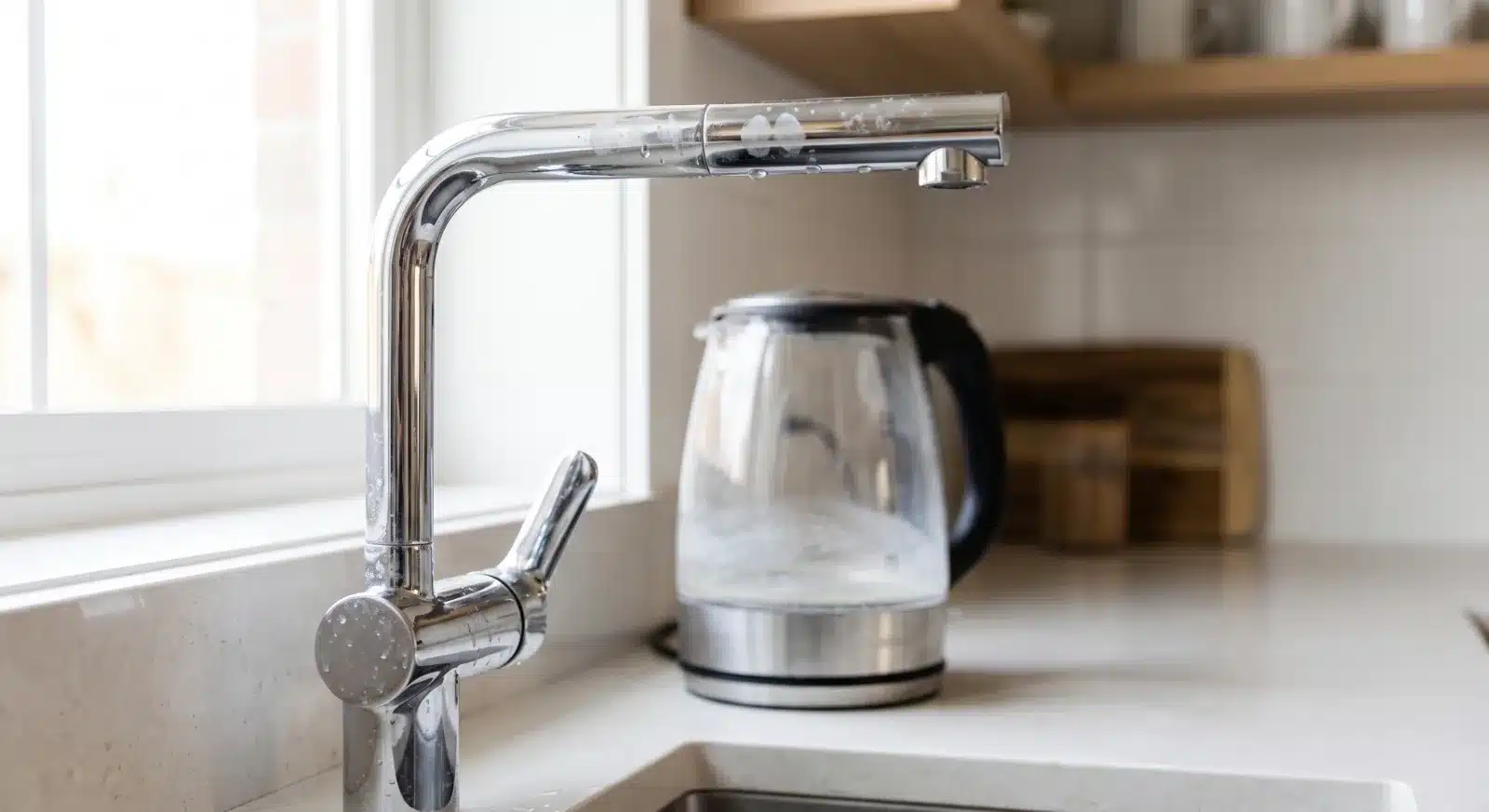
If your glasses come out of the dishwasher dull and your bathroom tiles are left with white marks, you probably have hard water. It's very common in many areas of Greece.
In this article we will look at what hard water is, how it affects your daily life, whether you should be concerned about your health, and what solutions exist for drinking water.
What is Hard Water?;
Hard water is water that contains high levels of salts, mainly calcium and magnesium. It collects these as it passes through rocks, which is why hardness varies from region to region. In limestone, karst soils, which are abundant in Greece, the water tends to be harder.
It's not something you can see with the eye in the water itself. You can tell by the signs it leaves: the sediment, the salts in the taps, the cloudiness in the glasses.
How Hard Water Affects Your Home
The most visible sign is scale. It collects in kettles, coffee makers, and on the heating elements of washing machines and water heaters, and over time it reduces their efficiency. The appliances work harder and break down sooner.
There's also the cleaning part. With hard water, soap and detergents don't lather as well, so you often end up using more. Glasses and dishes come out with marks, and in the bathroom, salt residue remains on the tiles and in the shower.
Finally, there's the taste. Hard water often has a stronger, metallic taste, which many people don't like in drinking water and coffee.
Is Hard Water Dangerous to Health?;
The short answer is no. Hard water is not considered a health hazard. According to the World Health Organization, calcium and magnesium salts do not pose a health problem, and in fact calcium and magnesium are useful elements.
So the issue with hard water is not safety, but the everyday practical inconvenience: the smell, the taste, the wear and tear on appliances. And these are exactly what we want to address.
How Hard Water is Treated in Drinking Water
A clarification is needed here. One thing is the dirt that gets into all the appliances in the house, which concerns the entire network of the house, and another is the water you drink from the tap. A drinking water filter works on the latter: it improves the water you drink and cook with.
For drinking water in hard areas, Olympus filters have solutions with a scale retention stage. Double and triple systems add a separate scale stage, while the reverse osmosisis the most complete solution for very hard or brackish water, providing maximum purification.
The result is water with a cleaner taste in the glass and in the coffee, without the strong metallic taste of hard water.
Which Olympus Solution to Choose for Hard Water
If your water is moderately hard and you want a better taste in your drinking water, a dual system with a salt stage is usually sufficient. If it is more severely hard, or if you also have nitrates, a triple system covers more.
For the hardest water, or if you want the maximum possible purification, reverse osmosis is the right choice. And in any case, Olympus water filters leave the beneficial trace elements and remove chlorine and other unwanted substances. If you are not sure about the hardness of your area, you can check the analyses of the local water company, as published for example by EYDAP for water quality, or use the selection guide.
Why Hard Water Differs from Region to Region
Two homes in different cities can have completely different water, and the reason lies in the soil. Water that passes through limestone rocks dissolves calcium and magnesium salts, so it comes out harder. Water from other geological environments can be softer.
The source also plays a role. A mountain spring, a borehole in the plains, and water from a network that travels many kilometers, each arrives at the tap with different characteristics. That's why hardness is not the same even within the same area, and the best way to know what's true in your home is to look at local data.
Hard Water, Skin and Hair
Many people notice that with hard water, soap doesn't lather easily and that the skin feels "tight" after bathing. This is because the salts make it difficult to rinse and leave a residue.
This is not a health risk, it is more a matter of convenience. However, it is good to know that the drinking water filter concerns the water you drink and cook with, not the shower water. For the sensation on the skin and hair, we are talking about a different solution, which concerns the entire network of the house.
How to Measure the Hardness of Your Water
The most reliable way is to look at your local water company's analysis, where hardness is often reported in degrees or milligrams per liter. Many water companies publish this data by region.
If you want a simpler, everyday indicator, look at the signs: how much scale your kettle collects, how much limescale your taps leave, how easily soap lathers. It's not an exact measurement, but it gives you a good sense of whether your water is hard or not.
Frequently asked questions
How do I know if I have hard water?;
The most common signs are limescale in kettles and coffee makers, limescale in taps and tiles, cloudiness in glasses and less foam from soap. For exact figures, see the analyses of your local water company.
Is hard water bad?;
No. Hard water is not considered a health hazard. Calcium and magnesium are useful elements. The problem is practical: odor, taste, and wear on appliances.
Which Olympus filter does it help with salts?;
Double and triple systems add a salt retention stage, while reverse osmosis provides maximum purification for very hard or brackish water.
Does the drinking water filter solve the smell throughout the house?;
A drinking water filter improves the water you drink and cook with. The rust in washing machines and water heaters affects the entire network of the house and is a different issue than drinking water.
In conclusion
Hard water is very common in Greece and, although it does not harm your health, it causes a musty, metallic taste and wear on appliances. For drinking water, Olympus filters with a salt retention stage or reverse osmosis provide cleaner, better-tasting water.
See all options in the category Olympus water filters and find the solution that suits the water in your area.




 Ελληνικά
 English


