Blog
How a Water Filter is Made in Greece


When you buy a water filter, you see the final product: a clean device that goes into the tap. But behind it there is a whole journey, from the selection of materials to laboratory tests. And it matters whether this journey takes place in Greece or in a factory thousands of kilometers away.
Olympus Antimicrobial Water Filters Plus manufactured in Greece, by Center Plus S.A., with a factory and central facilities in Acharnes and a sales branch in Athens. Let's see what this means in practice and how a water filter is born.
It All Starts with the Materials
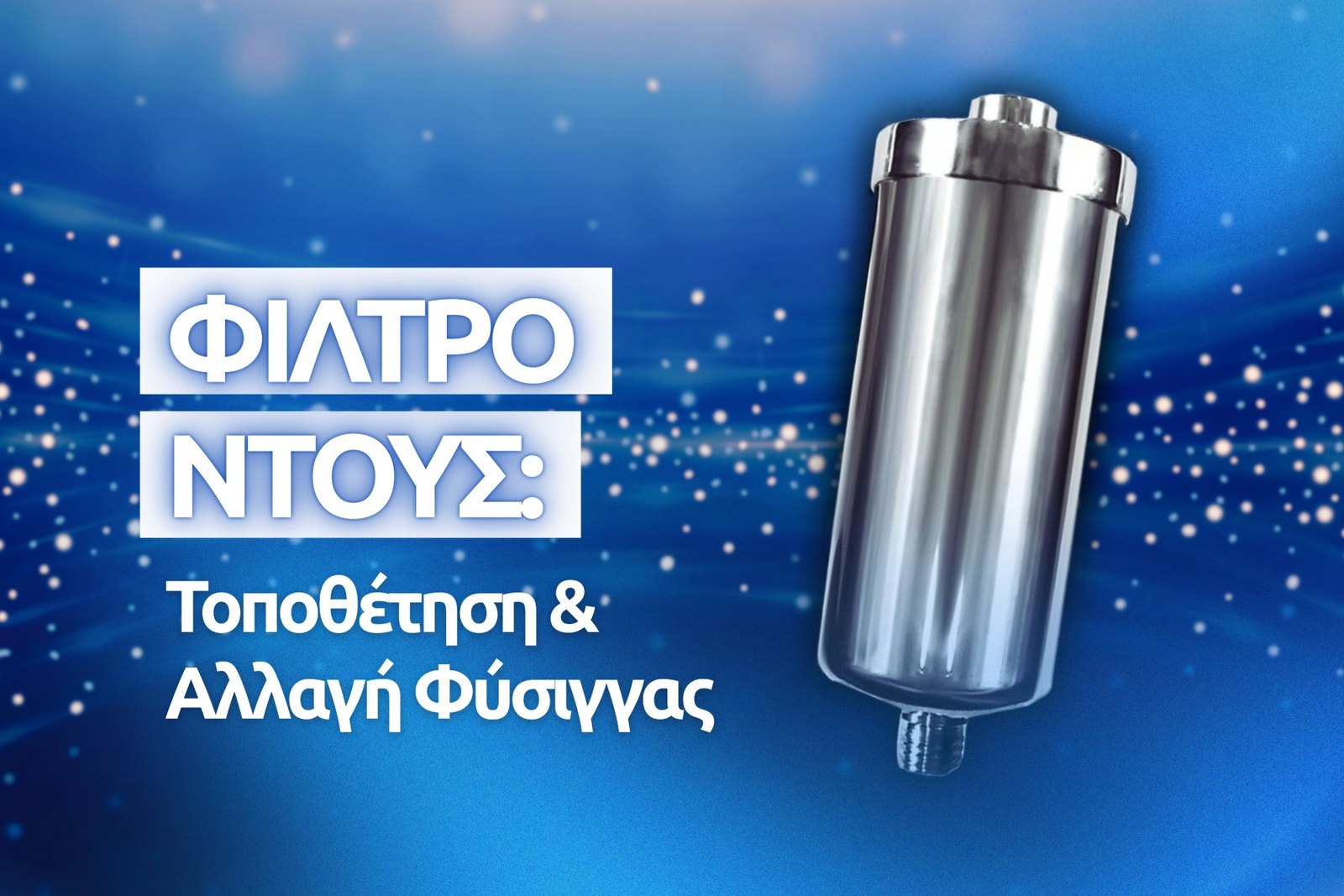
A water filter is only as good as the materials it is made of. At the core of every Olympus Plus water filtration device are three key components. First, ceramic materials, which act as a mechanical barrier and retain particles at the micron level. Second, activated carbon, which absorbs chlorine, organic compounds and pollutants. Third, stainless steel and antimicrobial copper alloy, which make up the housing and inner chamber.
The quality of these materials determines everything. A cheap ceramic with uneven porosity lets things through that shouldn't. A degraded carbon quickly becomes saturated and stops working. That's why the selection of raw materials is the first and most critical step in manufacturing.
The Assembly: From the Pieces to the Device
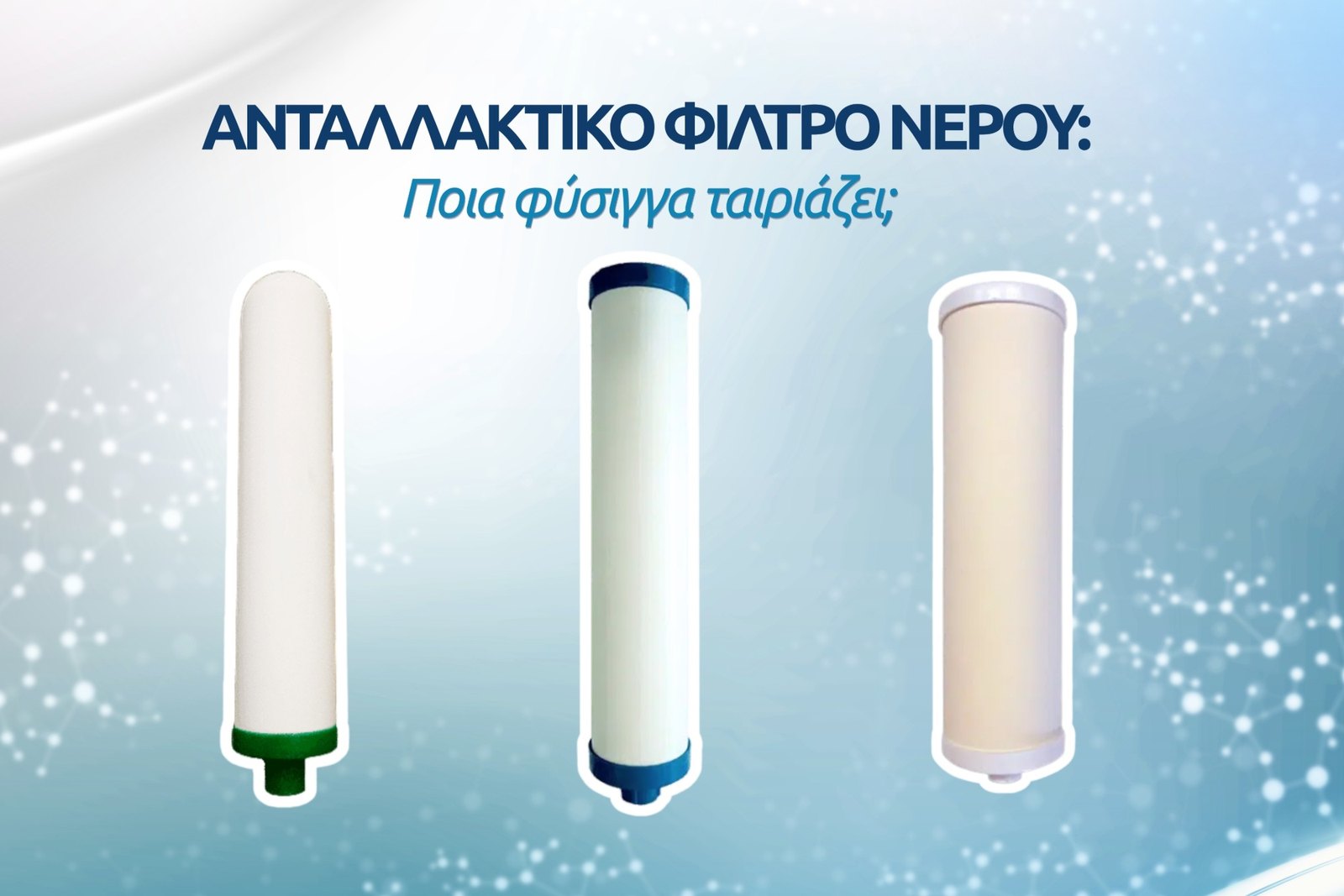
Once the materials are secured, assembly comes next. Here, the ceramic elements and activated carbon are placed inside the cartridge in a specific order and density, so that the water passes through all the filtration stages. The cartridge is then integrated into the stainless steel housing, with the inner copper chamber taking on the antimicrobial protection.
Precision at this stage is what sets a reliable filter apart. A poor seal means leaks or water bypassing the filter. A miscalculation in carbon density means either too slow a flow or insufficient filtration. The proximity of production, i.e. the fact that everything is done in one Greek factory and not on scattered production lines, allows for closer control at every step.
Quality Control: Where Trust Matters
A water filter doesn't just look right, it has to be proven right. This is where laboratory testing comes in. Olympus Plus products have been tested by three certified European chemical laboratories, as well as by the Microbiology Laboratory of the University of Athens and the Agricultural University for bacterial retention.
These tests confirm two things. First, that the filter actually removes what it claims to remove: chlorine, pesticides, heavy metals, asbestos fibers, hexavalent chromium, arsenic, lead and cadmium. Second, that it retains beneficial minerals and trace elements, rather than removing everything indiscriminately. The quality of drinking water in Europe is defined by EU Directive 2020/2184, and checks are made with this context as a reference.
The Greek Patent of Antimicrobial Copper
One element that makes the Greek construction special is the patented antimicrobial copper. The CW606N and CW508L alloys in the inner chamber are not a random choice of material, but the result of research and development that led to patented technology. According to the manufacturer, the chamber neutralizes up to 95% of microbes within two hours.
The fact that such a patent is being developed and applied to a Greek product says something about the level of domestic production. This is not a repackaging of imported components, but a complete technological proposal that is designed and manufactured here.
Why Greek Manufacturing Matters
Beyond the feeling of supporting domestic production, Greek manufacturing has practical advantages. Technical support is provided in Greek, with a human answering the phone. Spare parts are immediately available, without waiting for import. And the warranty, two years with ongoing support, is backed by a company located here, not on another continent.
Look at her full range of Olympus Plus filters, from the basic Above Counter at 77 euros until the turn reverse osmosis from 250 euros. If you don't know which one is right for your area and household, guide to choosing the right model it helps you decide.
From the Factory to Your Tap
The journey of a water filter, from the raw material to your glass, involves dozens of decisions. Material selection, assembly precision, laboratory tests, patented technology. When all of this is done in Greece, under one roof, the result is a product you can trust and support over time.
Clean water doesn't just mean a good cartridge. It means an entire chain that works properly, from start to finish.



 Ελληνικά
 English


