

Blog
How Often Should You Change a Water Filter?;

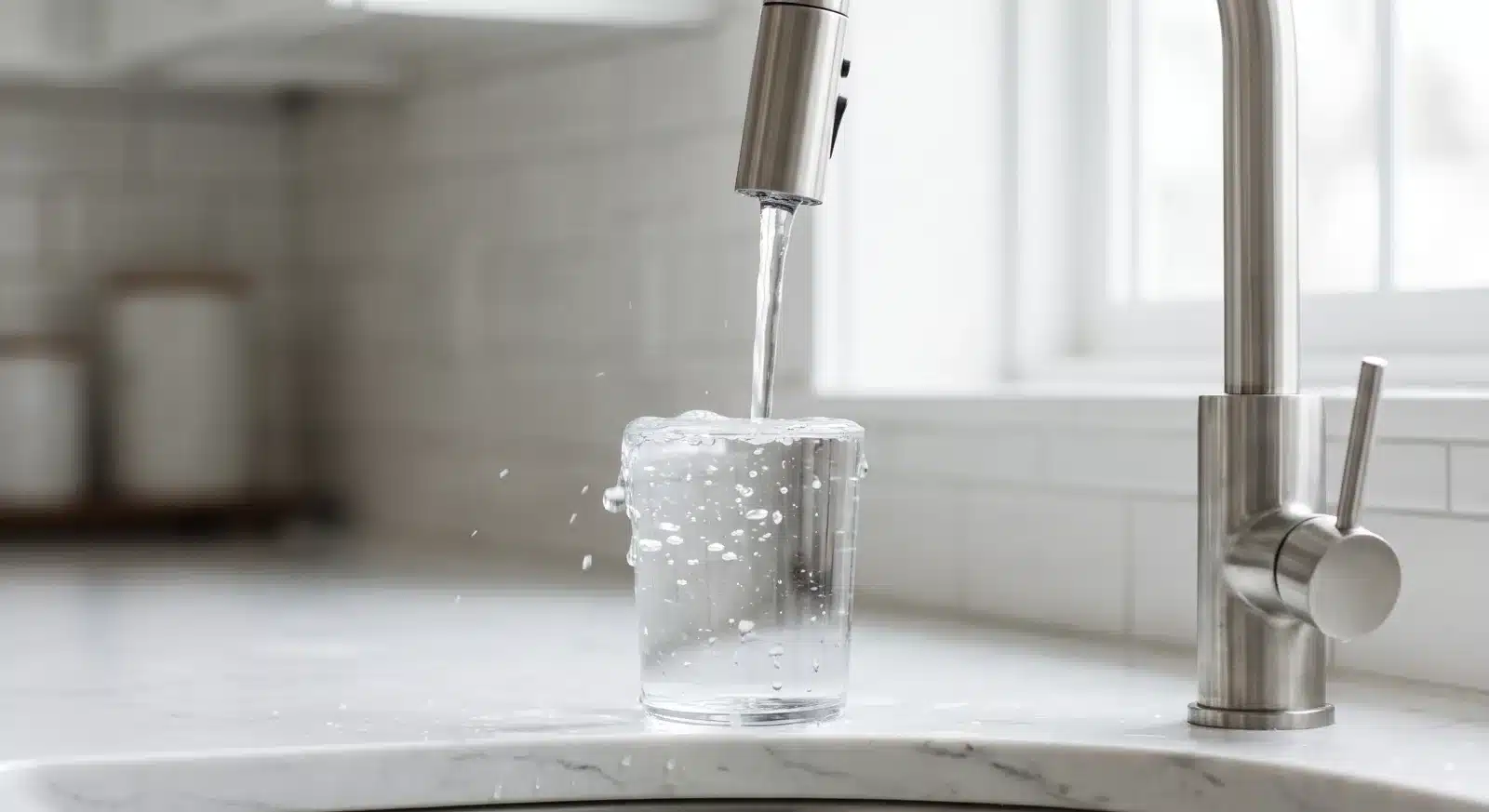
A water filter only does its job well as long as its cartridge is in good shape. Over time, it fills with whatever it has retained, and then it needs to be replaced. Exactly when is one of the most common questions asked by those who have or are thinking about installing a filter.
In this article you will see when to change the cartridge, what affects its duration, what signs tell you that it's time, and how easy it is to change.
How often is the cartridge changed?;
The general answer for Olympus water filters is approximately every 12 months or 8,000 liters, whichever comes first. For the GIGA series, which has a larger capacity, the number goes up to 14,000 liters.
These two limits exist because the cartridge gets tired in two ways: from the amount of water that passes through and from time. Even if you drink a little water, it is a good idea to change the cartridge once a year, because the time limit also counts, not just the liters.
What Affects Cartridge Duration
Consumption is the key factor. A home with many people or a business uses more water, so it reaches the liter limit faster.
The quality of the water in your area also plays a role. In water with a lot of suspended particles, the cartridge will charge faster and may need to be replaced a little earlier. Therefore, the numbers given by the manufacturer are a good guide, but signs of use give you the final picture.
Signs That It's Time for Change
Beyond the calendar, the water itself tells you a lot. The most common signs are:
- The taste or smell of chlorine begins to return to the water.
- The flow through the filter becomes slower than at first.
- It's been about a year since the last change.
- You have reached close to the liters that the manufacturer gives for the cartridge.
If you notice one or more of these, it's time to install a new cartridge.
Why It's Important to Change in a Timely Way
A saturated cartridge no longer filters as well. It gradually lets through more of the substances it should be holding, such as chlorine, and the taste returns. Having clean water is the reason you installed a filter, so timely replacement is what maintains the benefit. The importance of clean drinking water is also recognized by World Health Organization.
The good news is that Olympus filters also have built-in antimicrobial technology, with the inner chamber self-disinfecting. This helps with the hygiene of the device, but it doesn't negate the need to change the cartridge on time.
Different Types, Different Frequency
In over- and under-counter filters, we are talking about the basic cartridge, with the rule of 12 months or 8,000 liters. In double and triple systems there are more stages, for salts or nitrates, so you are monitoring more than one cartridge, each with its own duration.
In reverse osmosis, the system has pre-filters and a membrane, each with different replacement times. In any case, the manufacturer provides instructions for each stage so you know what you are watching.
How Easy is Change?
In the above-counter filter, changing the cartridge is easy and without plumbing, with just a few movements. In the below-counter and more complex systems, the process is also simple, following the instructions.
It is a good idea to have a spare cartridge available so that you are not left without filtered water when the time comes. Because Olympus filters are Greek-made, spare parts are easy to find.
What Happens If You Are Away for a Long Time
If the house is closed for a few weeks, for vacation or for any other reason, water stagnates in the pipes and in the filter. When you return, it is a good idea to let the tap run for a while before using the filter again, so that the water is refreshed.
This is where the antimicrobial technology of Olympus filters comes in, as the inner chamber self-disinfects and does not become a hotbed of germs while you are away. However, if the time for replacement is approaching anyway, a vacation or extended absence is a good reason to put in a fresh cartridge.
A Simple Maintenance Checklist
To make sure you don't miss out on the change, a simple routine helps:
- Note the date you inserted the last cartridge.
- Set a reminder for about a year later.
- Keep a spare cartridge at home so you don't run out.
- Pay attention to the signs, the taste of chlorine, and the flow, because they may alert you before the calendar.
This way, maintenance becomes something you don't even think about, and your water stays consistently clean. But even if you forget, the company makes sure to notify you about cartridge renewal when it's time to change your filter.
Frequently asked questions
Every now and then I change the cartridge in the Olympus filter;
Approximately every 12 months or 8,000 liters, whichever comes first. In the GIGA series, the liter limit reaches 14,000.
What happens if I don't change the cartridge on time?;
A saturated cartridge filters less effectively, and the chlorine taste slowly returns. You lose the benefit you got from installing the filter.
How do I know it's time?;
The main signs are the returning chlorine taste or smell, slower flow, and the time or liters that have passed since the last change.
Do I need a plumber to change it?;
Not for the countertop filter, where changing it is easy to do yourself. For other systems, follow the manufacturer's instructions.
In conclusion
A water filter is only as good as its cartridge. The general rule for Olympus filters is every 12 months or 8,000 liters, with signs of use, such as chlorine taste and flow, giving you the final picture. With timely changes, your water stays clean all year round.
See them Olympus water filters and, if you need help choosing, the selection guide directs you.





 Ελληνικά
 English


