Blog
Water Quality in Greece by Region: What to Know


Tap water is not the same everywhere. You drink one thing in Athens, another on an island in the Cyclades, another in a village in Thessaly. Geography, water source, and local geology shape exactly what comes out of your tap.
This article won't tell you that your water is dangerous. Tap water in Greece is tested and safe to drink. But it will explain why quality varies by region and how to choose a filter depending on where you live.
Why Does Water Differ from Region to Region?
Three factors determine what you drink. First, the source: surface water from lakes and dams tends to be softer, while groundwater from wells passes through rocks and picks up more salts. Second, the geology: limestone soils yield harder water, rich in calcium and magnesium. Third, human activity: in areas with intensive agriculture, fertilizers can raise nitrates in groundwater.
The quality framework for the entire European Union is defined by EU Directive 2020/2184. Local water companies regularly publish analyses, such as EYDAP for water quality, and it's worth looking into them for your area.
Athens and Attica
Athens is mainly supplied with surface water, through the reservoir system of Mornos, Evinos, Marathon and Yliki. Surface water tends to be relatively soft and is systematically treated and controlled by EYDAP. In practice, the main issue for the Athenian consumer is the chlorine used for disinfection and, in old apartment buildings, the condition of the internal pipes and tanks.
For most households in Attica, a countertop filter with activated carbon such as Above Counter at 77 euros meets the need: removes chlorine and pollutants, improves taste and preserves beneficial salts.
Thessaloniki and Northern Greece
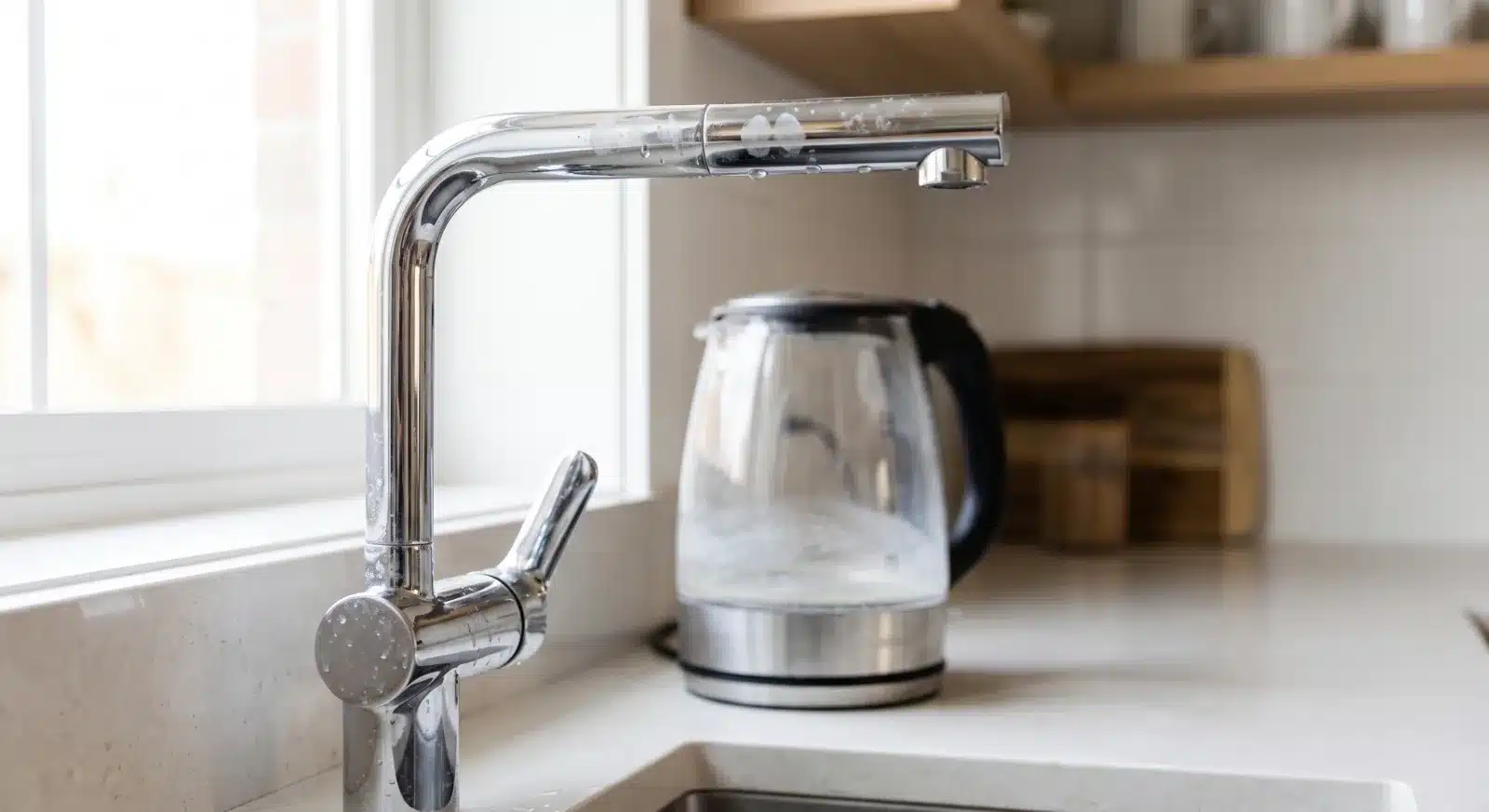
Thessaloniki combines surface water from Aliakmonas with water from boreholes. Borehole water usually has higher hardness, meaning more calcium and magnesium salts. In practice, this means more scale in the kettle and coffee maker, and a more intense salt taste.
In areas with hard water, it's worth looking into what it means water hardness and how you deal with it. For mild to moderate hardness, a countertop filter noticeably improves the taste. For severe hardness or high nitrates, the solution goes up a level.
Islands and Coastal Areas
Islands are the most challenging case. Many rely on drilling and, in many cases, desalination. The water can be hard, with increased salts, and in some coastal zones with salinization, i.e. the infiltration of seawater into underground aquifers, which increases salinity.
Here a simple carbon filter is not enough for the salt issue. The right solution is reverse osmosis from 250 euros, which removes salts and chemical compounds to another level. If you live permanently or seasonally on an island, it's worth checking the local analysis before choosing.
Rural Plains: Thessaly, Sterea, Macedonia
In large agricultural plains, such as the Thessalian plain and parts of Central and Macedonia, the main issue is nitrates. The intensive use of fertilizers can, over time, increase the concentration of nitrates in the groundwater that feeds local networks and wells.
Nitrates are not treated with a simple carbon filter. If your area is known for high nitrates, or if you are pumping from your own well, reverse osmosis is the way to go. In either case, start with a local water analysis.
How to Choose a Filter According to Your Area
The logic is simple. If your water is mostly surface water and the issue is chlorine and taste, a countertop filter with activated carbon and ceramic is sufficient. If you have hard water, such a filter improves the taste, but for severe hardness, look at more specialized solutions. If you have high nitrates or salinity, reverse osmosis is the right choice.
| Area profile | Main topic | Appropriate solution |
| Urban centers (surface water) | Chlorine, taste | Carbon/ceramic bench filter |
| Hard water (wells) | Salts, puri | Countertop filter, or RO for intense hardness |
| Islands / coastal | Salinity, hardness | Reverse osmosis |
| Rural plains | Nitrates | Reverse osmosis |
If you are not sure, the guide to choosing the right model guides you based on your data, and the full range of Olympus Plus water filters covers from the simple bench filter to reverse osmosis.
The First Step: Know Your Water
Before you buy anything, know what you're drinking. Check your local water company's published analysis, or get one done if you're pumping from your own well. Once you know whether your issue is chlorine, salts, or nitrates, choosing a filter becomes easy.
The right filter is not the most expensive or the cheapest. It's the one that suits the water in your area.