
Blog
Water filters: What Do You Need to Know Before Choosing the Right One?;


The quality of the water we consume daily directly affects the taste of our drinks and meals. Although tap water is controlled by law, it often varies in odor, taste, or suspended particle content, depending on the region and the network.
Water filters are an effective solution that aims to improve specific water parameters through controlled filtration processes. However, to choose the right system for your space, there are elements that you need to take into account.
What Are Water Filters and How Do They Work?;
Water filters are treatment systems that are installed at the tap or in the supply network, with the aim of improving specific characteristics of the water. Their operation is based on the passage of water through special filtering materials, such as activated carbon or other porous media, which retain particles and reduce selected chemical compounds.
The filtration process is natural and occurs in real time, without the addition of chemicals to the water. Depending on the type and specifications of the filter, specific parameters that affect daily water consumption and use in the kitchen are better controlled.
What Problems Do Water Filters Solve in Everyday Life?
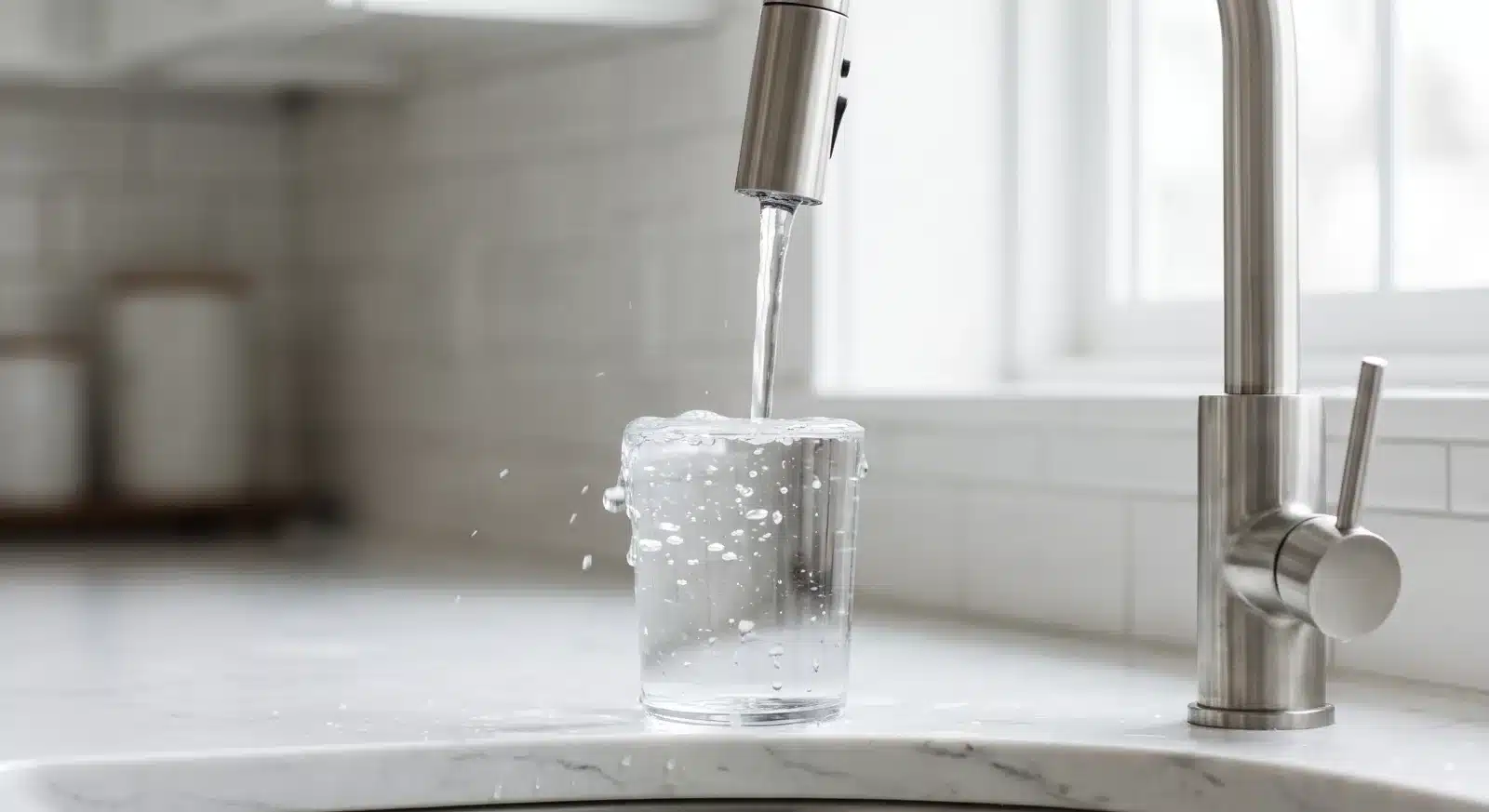
Although tap water complies with applicable standards, it may exhibit variations in taste, odor or purity, due to the network or local characteristics of the source. Water filters function as an additional treatment stage at the point of consumption, aiming to improve specific parameters that affect daily use.
The two main elements that are usually improved are:
- Taste and smell: Filtration reduces substances that affect organoleptic characteristics, such as chlorine, providing a more neutral feel to the water.
- Sediment and suspended particles: Filtration using ceramic and solid materials contributes to the retention of microparticles and solid residues, improving visual clarity and protecting household appliances from deposits.
What Are the Main Categories of Water Filters?;
Depending on the installation location, the water filters They are divided into two basic categories, countertop and undercounter. The choice between them depends on the available space, the technical requirements of the installation and the consumption needs of each household.
Countertop Water Filters: Features That Make the Difference
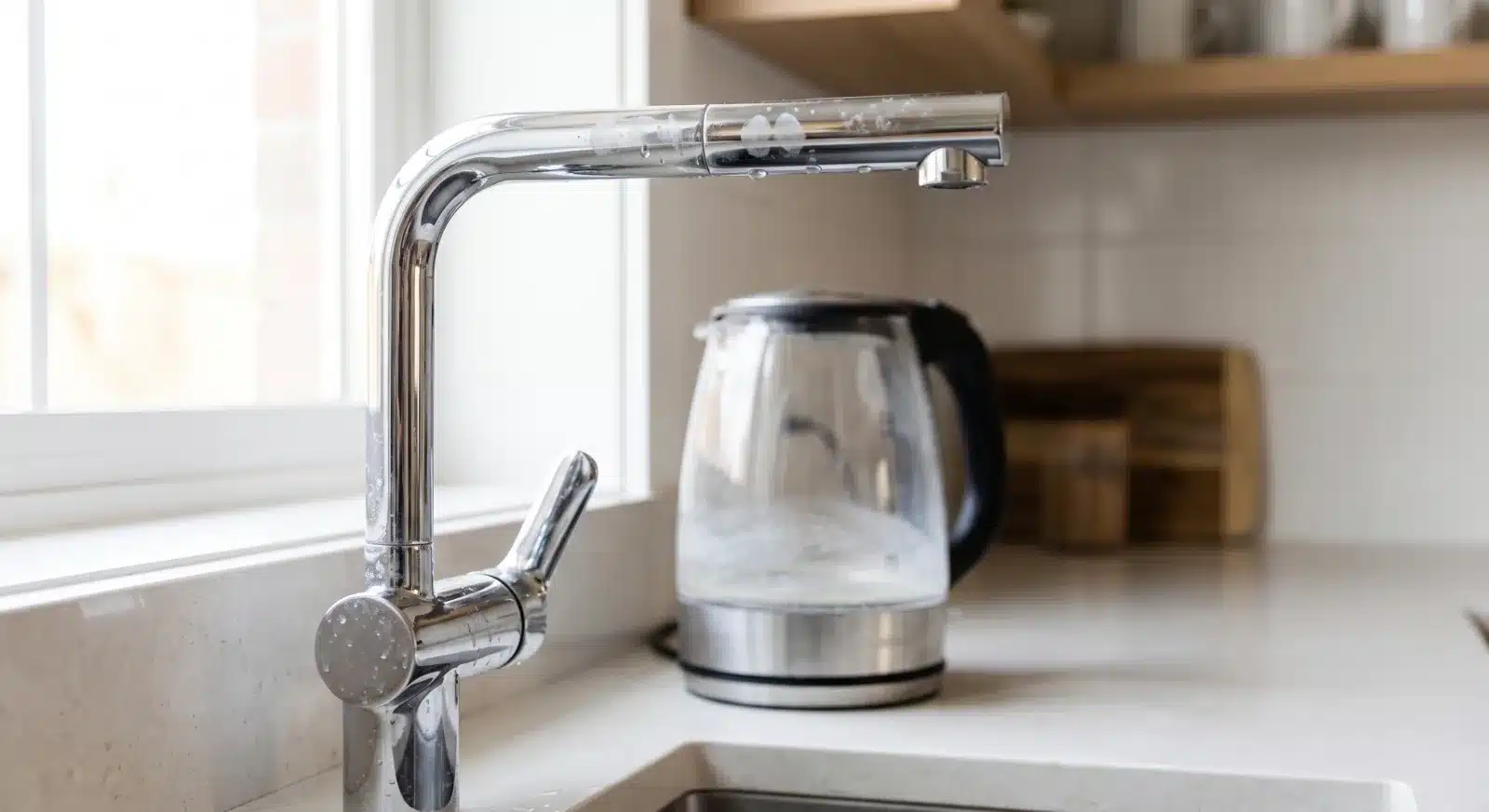
Countertop filters are placed directly on the kitchen counter and connected to the faucet via a special flow diverter. Their installation is usually simple and does not require modification of the plumbing.
They are usually the most practical choice for rental spaces or for users who want easy disconnection and transportation. They provide filtered water in real time, keeping the flow of unfiltered water separate. Of course, the size is discreet and replacing the spare filter is done without much effort.
Undercounter Water Filters: Features and Applications for Every Home
Undercounter filters, on the other hand, are installed inside the kitchen cabinet and are connected directly to the water supply. In this way, their placement offers discreet integration into the space, without taking up counter space.
What Does Antimicrobial Technology Mean in Water Filters and Why Is It Important?;
Antimicrobial technology in water filters involves the incorporation of special materials or treatments, aimed at limiting the growth of microorganisms on the inner surface of the device's chamber.
This technology does not replace the legally required disinfection of the water supply network, but contributes to maintaining the hygienic condition of the filter throughout its lifespan.
Thus, Olympus+ antimicrobial water filters, with the registered Greek patent, can kill up to 95% of the filter's pathogenic microbes within 2 hours.
How to Choose the Right Water Filter for Your Space?;
The choice of a water filter should be based on objective criteria and actual usage needs. The first step is to evaluate the water quality in the installation area, as well as considering practical factors such as available space (above or below the counter), daily consumption and ease of maintenance.
Equally important are the technical specifications of the system, compatibility with the existing installation and the availability of replacement filters. Choosing a Greek-made system, such as those you will find at https://olympusplus.gr/, as it ensures direct technical support and production control within Greece.
Frequently asked questions
How Often Should I Change a Water Filter?;
The frequency of replacement depends on the manufacturer's technical specifications and the amount of water consumed daily. Usually the change is made based on liters of filtration or a time interval (e.g. every 12 months), whichever comes first.
What is the Difference Between Countertop and Undercounter Filters?;
Countertop filters are placed externally and connected directly to the tap, without permanent installation. In contrast, undercounter filters are installed internally in the kitchen cabinet and are permanently connected to the water supply, offering a more discreet integration into the space since the water extraction is carried out from the filter's separate tap or from a three-way tap.
What Does It Mean That a Filter Has Antimicrobial Technology?;
In practice, antimicrobial technology helps to limit the growth of microorganisms on the inner surface of the filter. The antimicrobial property concerns the system itself and does not replace the treatment of water from the water supply network, but functions complementary to maintain the hygiene of the device.
If you are in Thessaloniki or Northern Greece, see our special guide to water filters in Thessaloniki with solutions tailored to local water supply needs.





 Ελληνικά
 English


